Key takeaways
- Dark concrete is usually algae, dirt and tire marks that wash away.
- Fresh oil comes out far more easily than old oil.
- Rust stains need a rust remover, not a stronger wash.
- Sealing after cleaning slows stains and algae.
What makes concrete dirty
Concrete is porous, so it holds algae, leaf stains, tire marks, oil and rust. Shade and moisture speed algae growth. Over time the slab darkens unevenly, which often looks worse than the stains themselves.
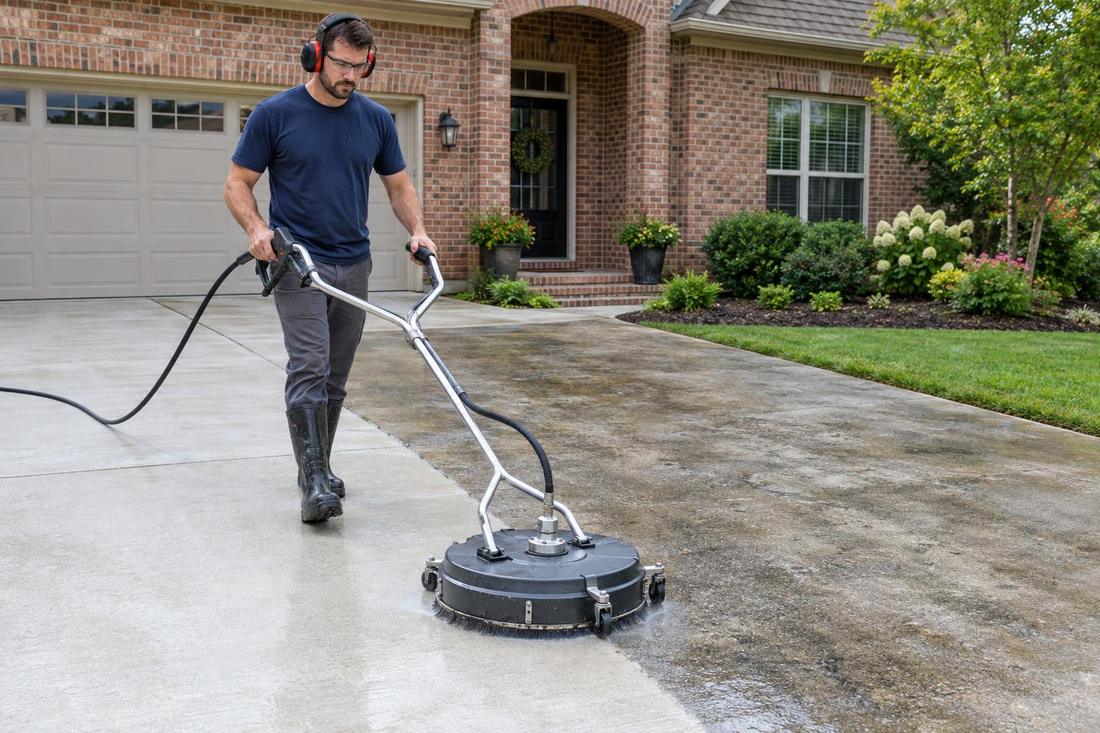
A surface cleaner evens out the color.
Which stains come out
Algae, dirt, leaf stains and tire marks usually wash out. Fresh oil can be absorbed and degreased. Rust needs a rust remover. Old, deep oil and paint may fade without disappearing, and an honest company tells you that before starting.
Test a small area first.
Preventing new stains
Wipe spills quickly and use a drip pan under leaky vehicles. Redirect sprinklers away from concrete to avoid rust from well water. Sweep leaves before they stain. A penetrating sealer helps repel oil and water.
Reseal every two to four years.
Choosing a method
A rotary surface cleaner gives even results on large slabs. Edges and corners are detailed by hand. Hot water helps with grease. Excess pressure can etch concrete, so controlled pressure matters.
Ask whether the company uses a surface cleaner.
Official sources and further reading
These are independent organizations. Links open in a new tab.
Quick answers
Can old oil stains be removed?
Often much of it, but a faint shadow may remain.
Should I seal a clean driveway?
Sealing can slow future stains. We explain the options.