Key takeaways
- Pressure washing uses high pressure, best for hard flat surfaces like concrete.
- Soft washing uses low pressure with a cleaning solution, best for roofs, siding and stucco.
- Soft washing kills algae at the root and often lasts longer.
- Many jobs use both, in the right order and on the right surfaces.
What pressure washing does
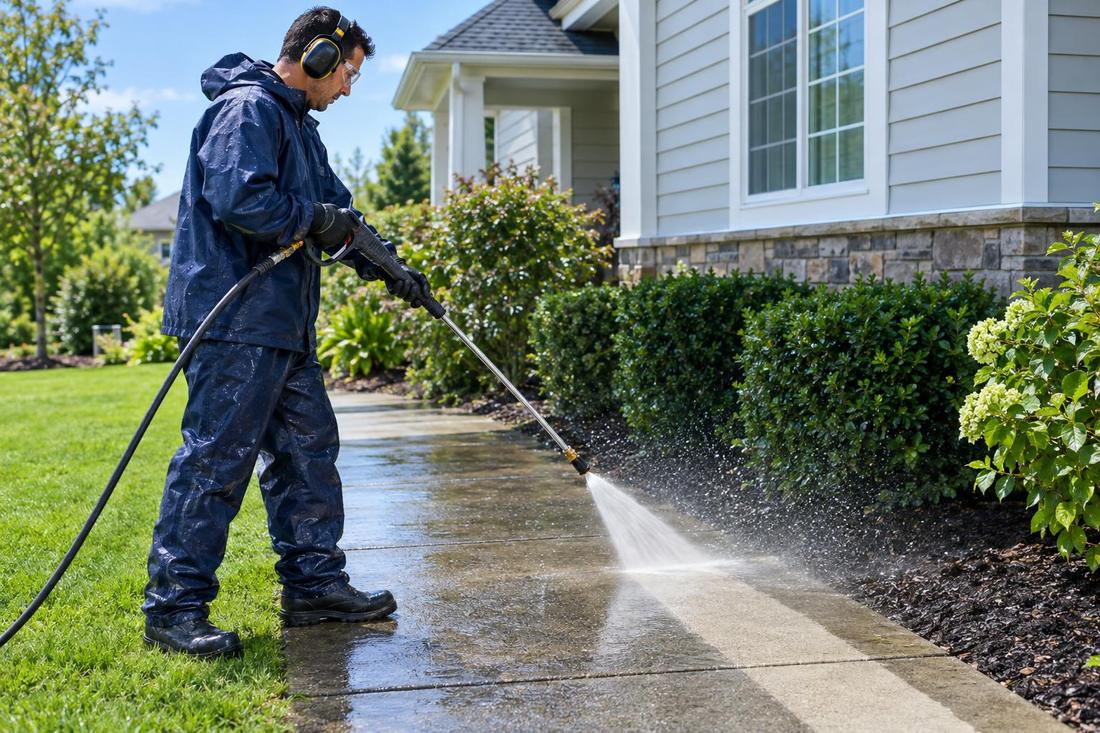
Pressure washing uses a strong stream, often with a surface cleaner, to knock dirt off hard materials. It works well on concrete driveways, walks and patios, where the material can handle the force. Used on the wrong surface it can etch, gouge and force water behind panels.
Technique and tips matter as much as pressure.
What soft washing does
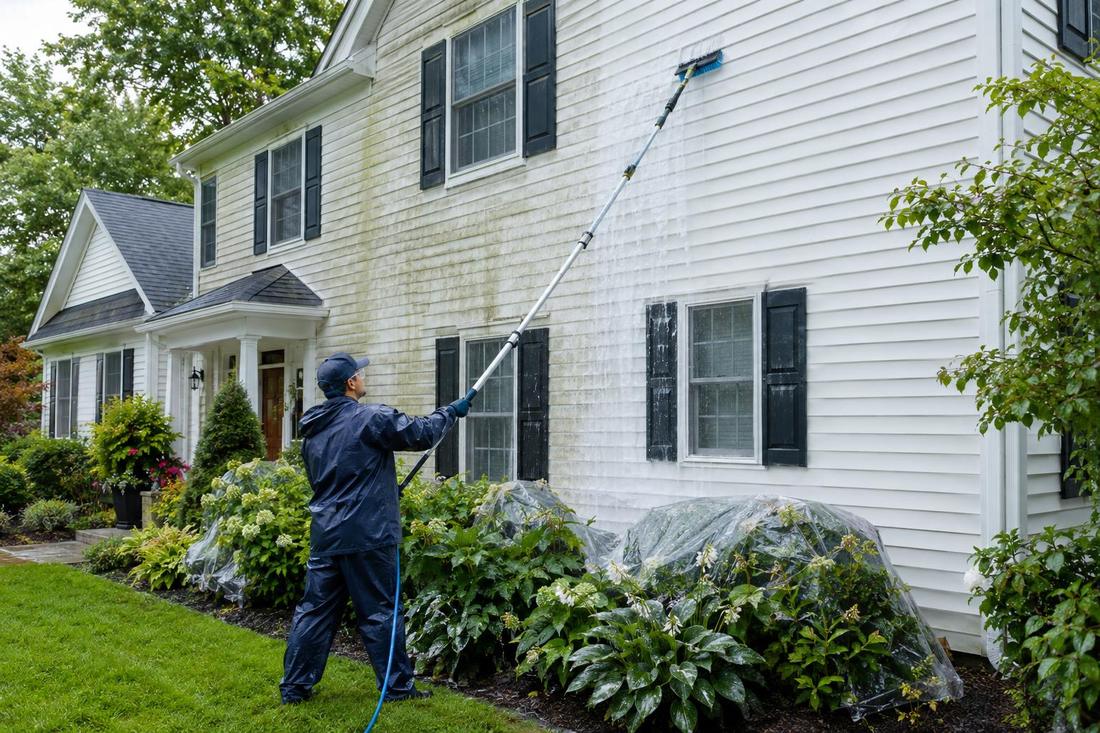
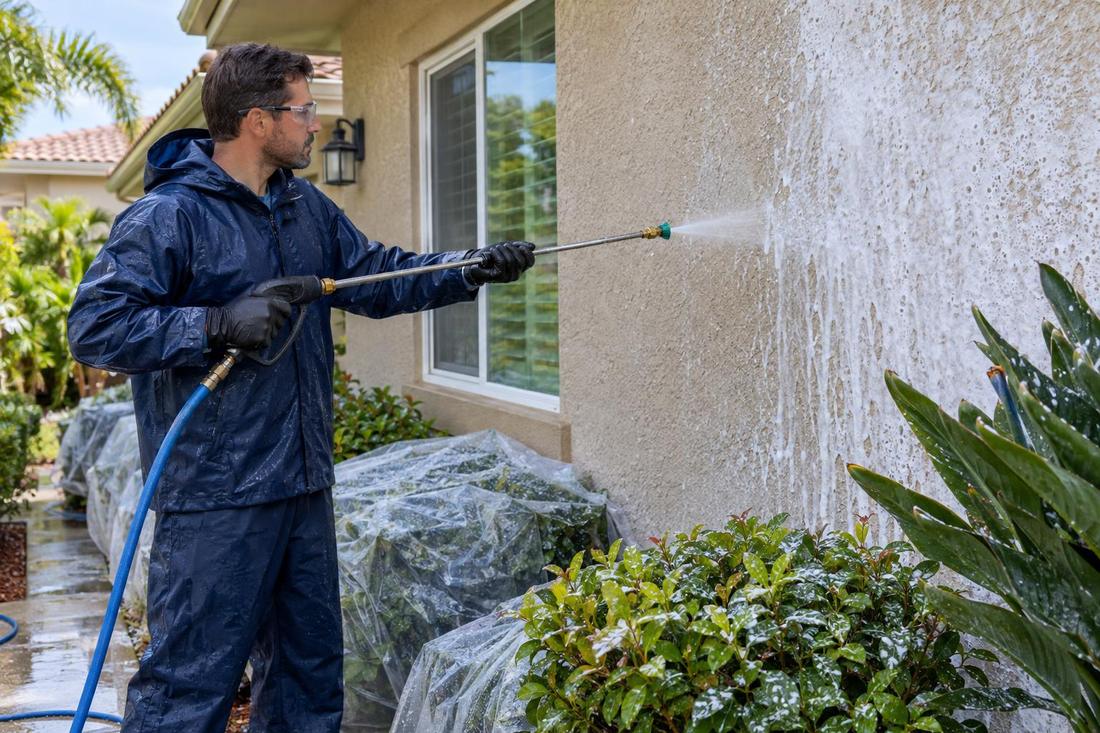
Soft washing applies a cleaning solution at low pressure, about like a garden hose, lets it dwell and rinses gently. The solution kills algae and mildew, so growth does not return as quickly. It is the right choice for roofs, stucco, painted siding and screens.
Plants are protected and rinsed.
Choosing for each surface
Concrete, brick flatwork and some stone take pressure with a surface cleaner. Roofs, stucco and vinyl take soft washing. Wood needs low to medium pressure with the grain. A professional chooses per surface, not one setting for the whole house.
Ask your company which method they plan for each area.
Why the order matters
Often a house is soft washed first, then flatwork is done with a surface cleaner so runoff does not recontaminate clean areas. Windows and gutters come last. A plan that works from high to low prevents streaks.
Ask how they sequence the work.
Official sources and further reading
These are independent organizations. Links open in a new tab.
Quick answers
Is soft washing as effective?
For growth like algae and mildew, often more effective and longer lasting.
Can I soft wash concrete?
You can, but a surface cleaner is usually better for flat concrete.