Key takeaways
- Black streaks on a roof are algae, not dirt.
- High-pressure washing strips shingle granules and should never be used on a roof.
- Soft washing treats algae at low pressure with a cleaning solution.
- Check manufacturer guidance and ask your company about their method.
What the streaks are
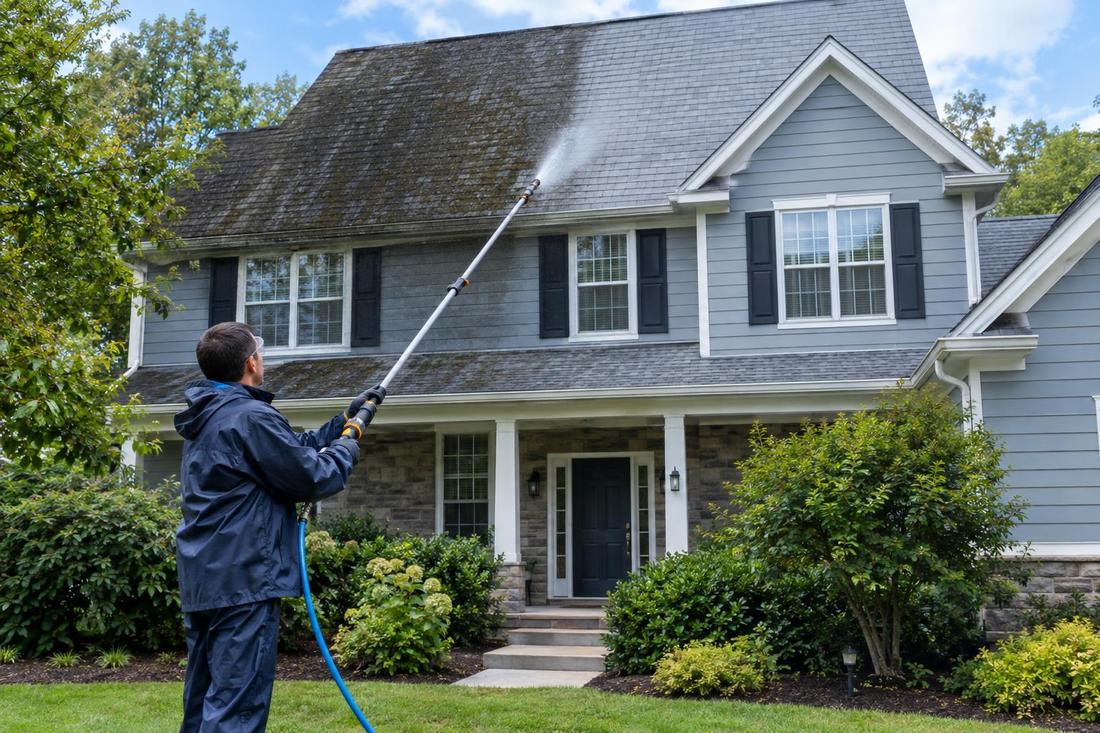
Those dark streaks on asphalt shingles are algae that feed on the limestone in the shingle. They spread slowly, hold moisture and can shorten the life of a roof. Moss and lichen cause other damage by lifting shingle edges.
Treating them early is easier.
Why pressure is a problem
Pressure washers can strip the granules that protect shingles, force water under the shingles and into the attic, and damage flashing. Many roofing manufacturers advise against pressure washing. The damage may not show right away.
Ask your company if they pressure wash roofs. The right answer is no.
How soft washing works
A technician applies a cleaning solution at low pressure, lets it dwell to kill the algae and rinses gently. Plants are wetted and protected, and gutters are flushed. The streaks fade over days as the dead growth washes away in the rain.
Results often last a year or more.
Roofs that need more care
Roofs with heavy moss, curling shingles or poor condition may need a roofer first. Metal and tile roofs have their own needs. A site visit lets us tell you what is safe and what is not.
We never wash a roof that looks unsafe.
Official sources and further reading
These are independent organizations. Links open in a new tab.
Quick answers
Does roof washing affect shingle manufacturer terms?
Pressure washing may. Soft washing follows the usual manufacturer advice, but check yours.
How do I know if my roof has algae?
Look for dark streaks, usually on the shadier, north-facing slopes.