Key takeaways
- Humid summers, mild winters and tree shade feed exterior growth.
- Growth appears first on north-facing, damp and shaded surfaces.
- Washing removes it, but moisture control slows its return.
- Soft washing kills growth at the root for longer-lasting results.
The conditions it loves
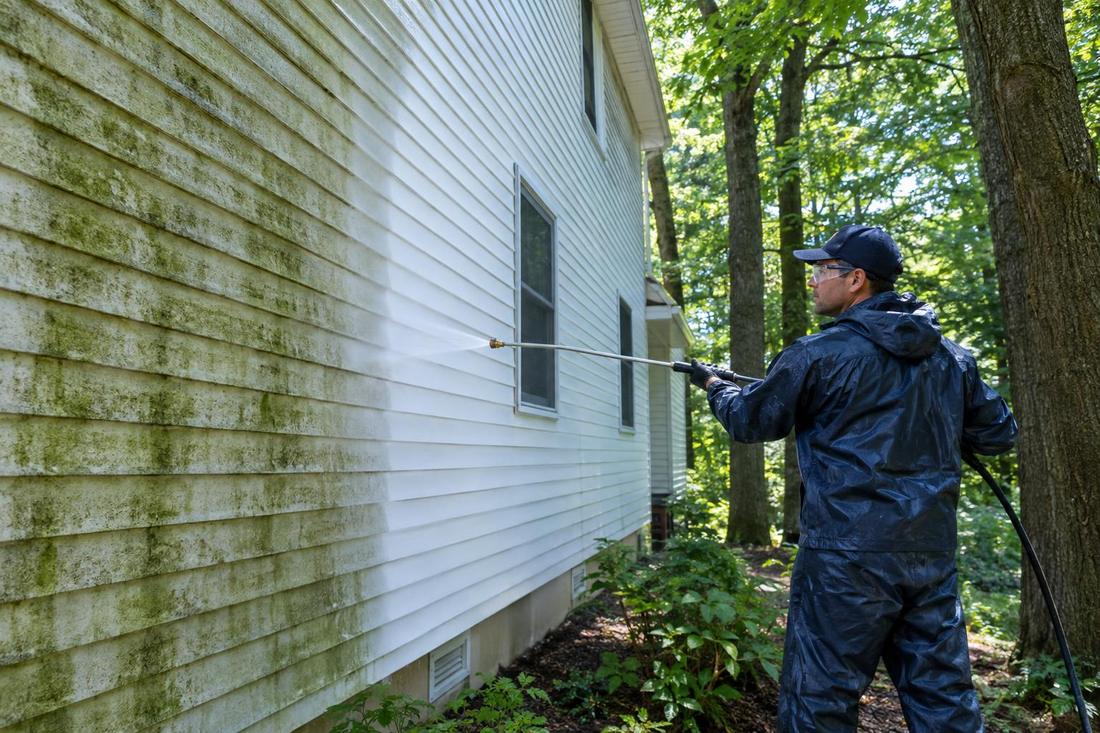
Algae, mildew and mold need moisture, warmth and organic food, like pollen and dirt. Middle Tennessee has long humid seasons and many tree-shaded lots, which creates ideal conditions. Spores travel on the wind, so growth can start anywhere damp.
It often appears first on north walls.
Where it shows up
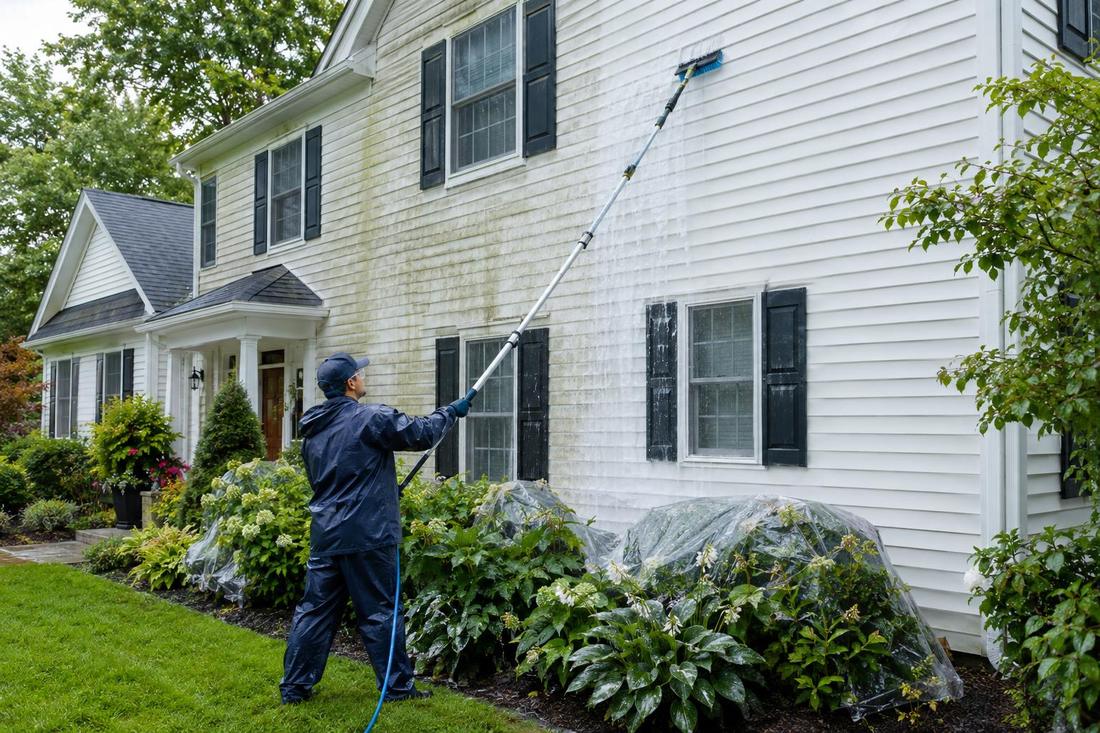
Look at north-facing siding, shaded roofs, damp concrete, wood fences, decks, retaining walls and under gutters that overflow. Mulch and plants against walls hold moisture against siding. Black streaks on roofs are algae.
Green on concrete is a slip hazard.
Slowing it down
Keep gutters clear, trim trees for sun and airflow, move mulch back from siding and fix leaking spigots and overflowing downspouts. Aim sprinklers away from walls and slabs. Regular washing resets the surface before growth gets thick.
Good drainage is half the battle.
Cleaning it right
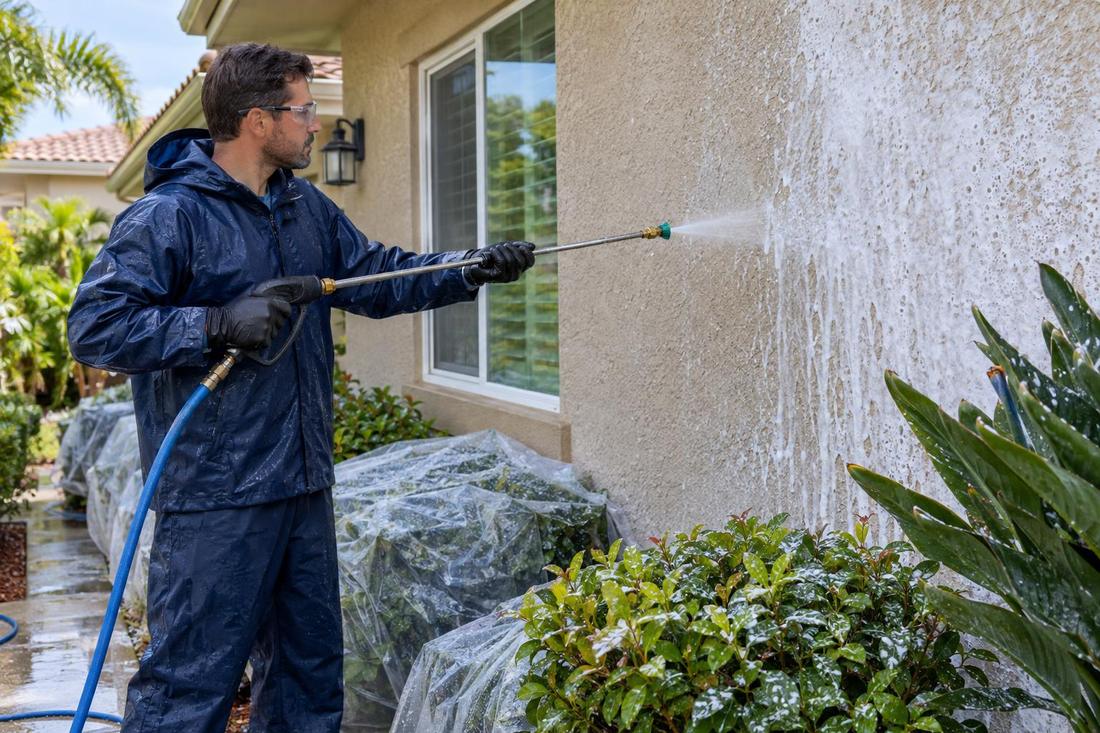
Pressure alone removes the visible growth but can leave roots behind. A soft wash with a cleaning solution kills the growth, so it takes longer to return. For sensitive surfaces like roofs and stucco, low pressure is the only safe option.
Ask your company about their method.
Official sources and further reading
- U.S. EPA: Nonpoint Source Pollution
- Tennessee Department of Environment and Conservation
- Power Washers of North America
These are independent organizations. Links open in a new tab.
Quick answers
Is exterior mold dangerous?
It can cause slippery surfaces and damage materials. Indoor mold needs a specialist.
How fast does growth return?
It depends on shade and moisture. Many homes need washing yearly.