Key takeaways
- Pre-wet plants and rinse them again after washing.
- Use cleaners by label and keep runoff away from beds and storm drains where possible.
- Keep pets and children away during the job and until surfaces dry.
- Tell your crew about delicate plants, ponds or beehives.
Pre-wet and rinse
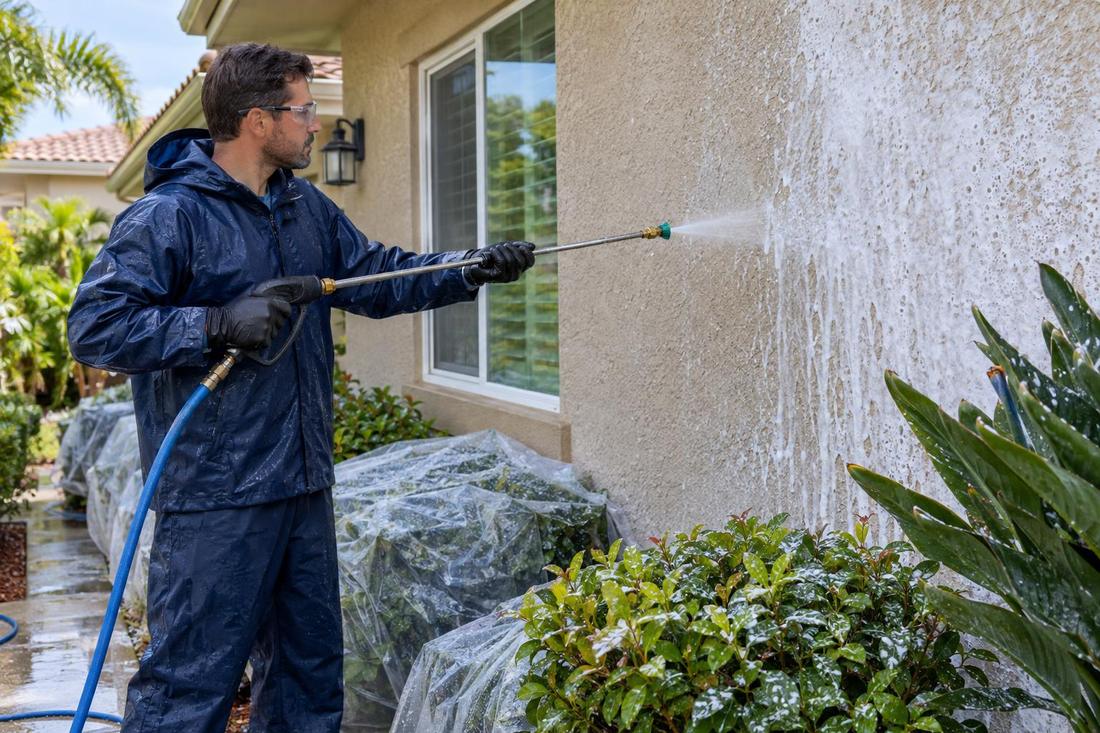
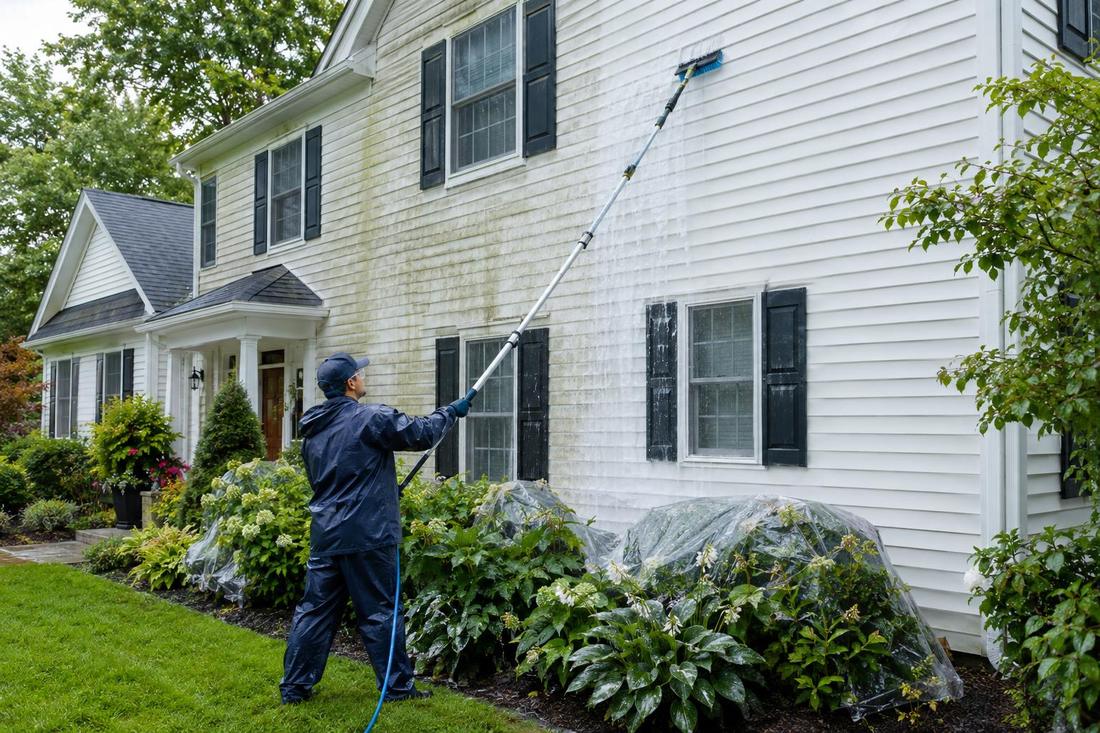
A careful crew soaks plants with fresh water before applying cleaners, which dilutes anything that lands on them, and rinses again at the end. Delicate plants can be covered. Tall shrubs and trees are wetted from the top.
Tell us about any plants that are already stressed.
Cleaner choice and label directions
Cleaning solutions should be used at the strength on the label and mixed correctly. Soft washing solutions are diluted before they reach the surface and rinsed away. We choose products that suit the job and avoid overuse.
Ask what products the company uses.
Runoff and drainage
Wash water should flow toward drains or lawns that can handle it, and away from ponds, wells and streams. On commercial pads, recovery systems keep grease and wash water out of storm drains. Rules vary by city and site.
The U.S. EPA has guidance on stormwater and runoff.
Pets and children
Keep pets and children inside during washing and until surfaces are dry. Close pet doors and bring in bowls and toys. Tell the crew about outdoor pets, ponds or beehives so we can plan around them.
Fresh rinse water is safe once dry.
Official sources and further reading
- U.S. EPA: Nonpoint Source Pollution
- U.S. EPA: Stormwater Program
- Tennessee Department of Environment and Conservation
These are independent organizations. Links open in a new tab.
Quick answers
Are cleaning products safe for pets?
Keep pets away while we work and until surfaces are dry. We follow product labels.
What about koi ponds?
Tell us. We cover or avoid them and keep runoff away.